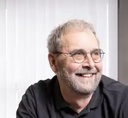
The Beginning: Fribourg 1983
When I studied Computer Science and Psychology in Fribourg in 1983, the world of artificial intelligence was still a very different one. The computers of that time – if one could even call them that – were clunky machines with limited memory and minimal processing power. A typical PC might have had 64 KB of RAM, and the internet, as we know it today, didn't even exist.
Nevertheless, I immersed myself deeply in the topic of learning – both human and machine learning. The central question that occupied me and that came up repeatedly in countless discussions with fellow students and professors was: Will computers one day be able to think and solve problems as well as humans?
This question was not only academically interesting at the time, but it also had something revolutionary about it. We were at the beginning of the computer age, and the possibilities seemed limitless – even though reality still lagged far behind the dreams.
The Pioneers Who Shaped Me
Two names particularly shaped my perspective at the time and influenced my understanding of what AI could be.
Terry Winograd and the Power of Language
Terry Winograd with his revolutionary SHRDLU system from the early 1970s was a beacon of possibilities for me. SHRDLU operated only in a simple block world – a virtual environment with geometric shapes that could be moved – but it enabled surprisingly natural language interactions.
You could talk to SHRDLU: "Take the red block and place it on the green cube." The system not only understood the instruction but could also ask clarifying questions: "Which red block do you mean?" This type of interaction was revolutionary at the time and showed me that computers could indeed be capable of understanding and responding to human language.
At the same time, Winograd's work also revealed the enormous limitations of AI at that time. SHRDLU only functioned in its tiny, perfectly defined world. As soon as one tried to apply it to real-world problems, the system collapsed.
Joseph Weizenbaum and the ethical questions
Joseph Weizenbaum with his famous ELIZA program – an early chatbot that simulated psychotherapy conversations – opened my eyes to a completely different dimension of AI research. ELIZA was actually very simple: it analysed the user's inputs for keywords and responded with pre-programmed phrases.
Nevertheless, people were often astonished by how "understanding" ELIZA seemed to be. Phrases like "Tell me more about your mother" or "How do you feel about that?" created the impression of an empathetic conversation partner.
Weizenbaum was, however, alarmed by people's reactions to his programme. He warned even then about the ethical implications of AI and the danger that people might place too much trust in machines. His criticism was prophetic – today, 40 years later, we are intensely discussing the same questions.
My conclusion at the time: Computers need to 'grow up'
After intensive engagement with the topic, countless hours in the university library, and experiments with the few available AI programmes, I came to a clear conclusion in 1983: The capabilities of the computers at that time were insufficient.
My theory was that computers would need to grow up similarly to humans – gathering experiences in an environment and learning gradually. I imagined that an AI system would have to start like a child: first learning simple concepts, then understanding more complex relationships, gathering experiences, making mistakes, and learning from them.
The analogy to human learning
This conviction was based on my study of psychology. Humans do not learn by memorising encyclopaedias, but through interaction with the world. A child does not learn the concept of 'hot' through a definition, but through the painful experience of touching a hot stove.
I thought AI systems would need to take a similar path: years or decades of interaction with the physical and social world to understand the nuances of human thought and behaviour. A slow, organic process of knowledge acquisition that would require generations of 'AI children'.
The limits of the technology at that time
This assessment was quite realistic when considering the technology of the time. The computers of the 1980s lacked both the processing power and the memory to execute complex learning algorithms. While neural networks existed theoretically, their practical implementation was extremely limited.
Machine learning was limited to simple algorithms that worked with tiny datasets. The idea of giving a computer millions of texts to learn from was simply unthinkable – not only because of the technical limitations but also because these texts were not digitally available at all.
What I could not imagine
At that time, it was simply inconceivable to me that computers could one day learn from a gigantic corpus of human texts in a very short time. This idea exceeded my imagination for several reasons:
Data availability: In 1983, the World Wide Web did not yet exist; most information was in physical media.
Processing power: Even with available data, there was a lack of capacity to process it.
Parallelism: The idea that a machine could learn simultaneously from thousands of sources contradicted my understanding of learning at the time.
The Turing Test: From vision to serious examination
Alan Turing formulated his famous test in 1950: A machine is considered intelligent if a human questioner cannot distinguish in a text-based conversation whether they are communicating with a human or a machine.
My skepticism from 1983
In 1983, the Turing Test still seemed to me like science fiction. The AI systems of that time were so obviously mechanical that the idea they could be mistaken for humans seemed absurd. While ELIZA could conduct superficially convincing conversations, it could only do so in very limited contexts. As soon as the conversation deviated from the pre-programmed patterns, the artificiality of the system became evident.
At that time, I estimated that it would take at least 50 to 100 years for a computer to pass the Turing Test – if at all. The complexity of human language, the nuances of communication, and the understanding of context and irony seemed to be insurmountable hurdles.
The reality of today
Today, 40 years later, we are significantly closer to Turing's vision – but there is no generally accepted 'victory'. Modern large language models can appear human in certain settings for limited periods; in other scenarios, they are reliably recognised. How 'passing' is defined varies depending on the test protocol, duration, choice of topics, and the expertise of the assessors. Serious academic literature therefore tends to speak of partial or context-dependent deceivability rather than a definitive pass.
Important context regarding the state of research:
There is no consensual, peer-reviewed 'final confirmation' that GPT-4 or its successors have 'passed' the Turing Test in the sense of a generally accepted standard.
Studies show that people in online setups sometimes struggle to distinguish between human and machine; however, the results depend heavily on the setup and instructions.
In longer, knowledge-intensive conversations with references and fact-checking, weaknesses continue to emerge.
The way there: What has fundamentally changed
Progress did not come from a single invention, but from the convergence of several developments:
The data revolution
The web and digitisation projects (e.g. scanned books, open knowledge bases) generated training corpora on an unimaginable scale.
Computing power and infrastructure
GPUs/TPUs, distributed training, and cloud infrastructure enabled massively parallel learning.
Architectures and training paradigms
Transformers and scaled pre-training regimes (plus RLHF) made generalising language models practically usable.
A look ahead
As someone who dreamed in 1983 that computers might one day think like humans, I am fascinated by how differently this dream has become reality – not as a replica of thinking, but as a new bundle of statistics, scaling, and interaction. The question for me is no longer "Can computers think like humans?", but: "What does it mean for us when systems can competently act and communicate in more and more situations?" The answer does not clarify in a single moment, but in many concrete decisions where we balance benefit, risk, and responsibility.
References (verified)
Primary sources and classics
Turing, A. M. (1950). Computing Machinery and Intelligence. Mind, 59(236), 433–460. doi:10.1093/mind/LIX.236.433
Winograd, T. (1972). Understanding Natural Language. Cognitive Psychology, 3(1), 1–191.
Weizenbaum, J. (1966). ELIZA—A Computer Program for the Study of Natural Language Communication Between Man and Machine. Communications of the ACM, 9(1), 36–45.
Weizenbaum, J. (1976). Computer Power and Human Reason. W. H. Freeman.
Modern AI Architectures and Scaling
Vaswani, A. et al. (2017). Attention Is All You Need. NeurIPS.
Devlin, J. et al. (2019). BERT: Pre-training of Bidirectional Transformers. NAACL.
Brown, T. B. et al. (2020). Language Models are Few-Shot Learners (GPT‑3). NeurIPS.
Kaplan, J. et al. (2020). Scaling Laws for Neural Language Models. arXiv:2001.08361.
Hoffmann, J. et al. (2022). Training Compute-Optimal Large Language Models (Chinchilla). arXiv:2203.15556.
OpenAI (2023). GPT‑4 Technical Report. arXiv:2303.08774.
Evaluations and Societal Relevance
Floridi, L., & Chiriatti, M. (2020). GPT‑3: Its Nature, Scope, Limits, and Consequences. Minds and Machines.
Bommasani, R. et al. (2021). On the Opportunities and Risks of Foundation Models. Stanford CRFM.
Gilardi, F., Alizadeh, M., & Kubli, M. (2023). ChatGPT Outperforms Crowd Workers for Text Annotation Tasks. PNAS Nexus.
Jakesch, M., Hancock, J., & Naaman, M. (2023). Human Responses to Machine-Generated Content. CHI.
On the Classification of the "Turing Test" Today
Hernández‑Orallo, J. (2017). The Measure of All Minds: Evaluating Natural and Artificial Intelligence. Cambridge University Press.
Harnad, S. (1990). The Symbol Grounding Problem. Physica D.
Mitchell, M. (2023). Artificial Intelligence: A Guide for Thinking Humans. Penguin.
Write here ...